
You already know about the censorship.
You know about the accounts that disappeared. The videos that got taken down. The doctors who lost their platforms in 2021. The "shadowban" that everyone used to argue was a conspiracy theory until the Twitter Files showed the internal Slack messages. You know the shape of it because you lived through it, or you watched someone you trust live through it. You know it happened.
Six of the Americans it happened to sued the federal government over it. Their case, Finn v. Global Engagement Center, was dismissed in July 2026 on pleading defects — a procedural ruling — without ever reaching the merits. The judge did not decide whether the White House pressured Facebook to reduce their reach by sixty percent. The judge decided the complaint had too many defendants. So the evidence sits in the public docket, unruled on, and those plaintiffs built Restore the First to make sure it did not sit there in silence.
This statement is not about that fight. It is about the one that is already replacing it, in a way that will make the last fight look almost quaint.
The censorship that is coming will not look like censorship. It will not remove your post. It will not shadowban your account. It will not throw up a warning label on your video. It will do something quieter and much harder to catch: it will compose what you say, before you say it. And on September 3, 2026, Bernie Sanders and Greg Casar introduced a bill to license which companies are allowed to build the layer that will do it.
What is actually being built
Open your phone. Look at the last email you sent. Was any of it drafted by autocomplete? Autocomplete used to be five letters at the end of a word. Now, in Gmail, in Outlook, in iMessage, in every major writing app, it is entire sentences, entire paragraphs, entire replies — offered before you have finished thinking. You accept some and ignore others, but the ones you accept are now, in a real and measurable sense, not fully yours.
Open your browser. Type any question into the search bar. Google no longer returns ten blue links. It returns an "AI Overview" — a single confident paragraph, generated by Google's model, that answers the question directly. Most people never scroll past it. The links are still there. Almost nobody looks at them.
Now imagine — because it is not imagination, it is what is being pilot-tested at every major tech company this year — the same layer inside your text messages, your therapy apps, your kid's homework helper, your car's voice assistant, your smart speaker, your video calls. Not autocomplete. Not search. Everywhere.
That layer is called AI mediation. It sits between you and every act of speech, every act of listening, every question you ask, every answer you receive. It is being trained by three or four companies in San Francisco. And a Harvard research psychologist named Robert Epstein has spent the last decade proving, in peer-reviewed journal after peer-reviewed journal, what that layer can do to what a person believes.
The three papers nobody in Congress is reading
In 2015, Epstein and Ronald Robertson published "The Search Engine Manipulation Effect (SEME) and its possible impact on the outcomes of elections" in the Proceedings of the National Academy of Sciences. They ran controlled experiments and found that biased search rankings shift the voting preferences of undecided voters by 20 percent or more, and in some demographic subgroups by up to 80 percent. The paper has over a thousand academic citations. Google denied it and kept its rankings behind a wall.
In 2022, Epstein published "The Answer Bot Effect (ABE): A powerful new form of influence" in PLoS ONE. The finding: when the same biased content is delivered through an answer box — one confident response instead of ranked links — the persuasive effect is larger than SEME, and users trust it more, not less. The persuasion moved deeper. It also became harder to see, because there were no longer ten links to compare against.
In 2025, Epstein, Alex Newland, and Lisa Tang published "The Digital Personalization Effect (DPE)" in Computers in Human Behavior. The finding: when biased content is personalized to what the interface has already learned about you, the persuasive effect compounds. Every additional data point sharpens the tool.
Read those three papers in order and the arc is inescapable. Rankings shift you. Answer boxes shift you more. Personalization multiplies both. Each generation of the technology moves the point of influence closer to the citizen and further from oversight. Each generation is harder to test for, harder to prove in court, harder to even notice happened.
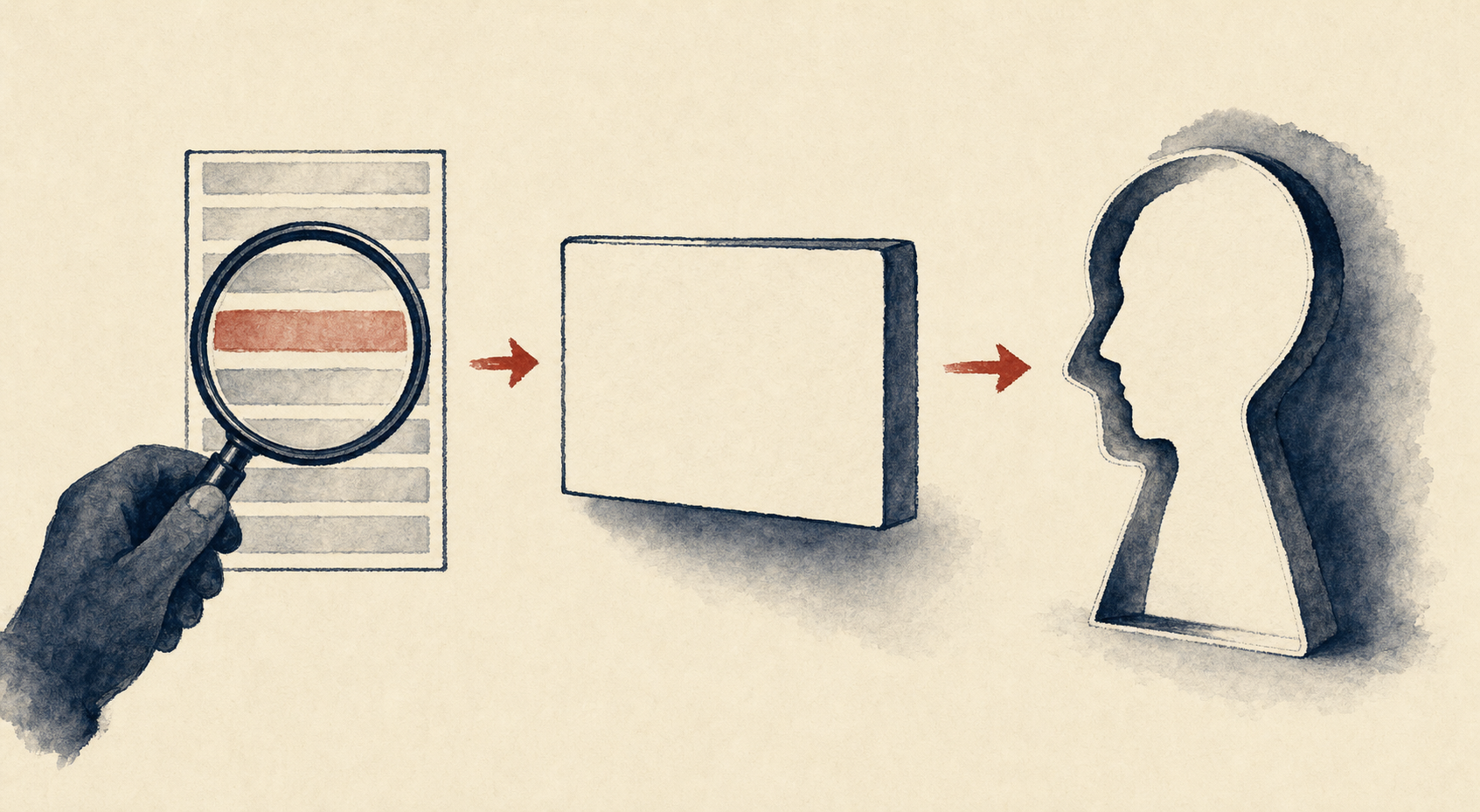
The AI mediation layer being built into every device in America right now takes all three effects — SEME, ABE, DPE — and applies them at the point where you compose your speech, not merely where you retrieve it. It is one more step down the same arc. And it is the step where a person's own words start to blend with the model's words to the point that neither the speaker nor the listener can reliably tell them apart.
That is the layer the Sanders bill is about to license.
What the bill actually does
The Sanders-Casar Ban Artificial Superintelligence Act is described in its own release as banning "artificial superintelligence" and creating a new cabinet-level federal agency to enforce the ban. Sold that way, it sounds like the government reining in dangerous corporate AI. Read the actual language, and it does something very different.
The bill defines "Artificial Superintelligence" as an AI system that:
"exhibits or can easily be modified to exhibit capabilities that match or exceed human cognitive performance and capabilities across a broad range of domains or tasks."
The five-word phrase "or can easily be modified to exhibit" is the entire policy. A closed-weights model — the kind you get through Anthropic's or OpenAI's API — cannot be modified by anyone outside the company. An open-weights model — the kind you can download, run on your own laptop, fine-tune, fork, or build your own competing product from — can be modified by definition. That is what "open source" means.
Under the bill's language, any open-source AI project of any capability level can be classified as "artificial superintelligence" at the discretion of a cabinet-level federal agency, and its developers subjected to what the release summary explicitly calls the "corporate death penalty" — corporate dissolution — and "not more than 20 years in prison."
The bill does not regulate what AI does. It licenses who is allowed to build it. And the definition is written such that only two or three companies — the incumbents who ship closed-weights systems through APIs — can continue building at all. Everyone else, from a nonprofit lab to a solo developer to a university research group, is either licensed by the new agency or criminalized.
The full mechanics are documented in a companion analysis from Restore the First coalition member Sayer Ji.
Where the bill came from
On May 14, 2026, the Bill and Melinda Gates Foundation announced a $200 million, four-year partnership with Anthropic — the largest publicly disclosed direct partnership between a major private foundation and a frontier AI company.
On August 26, 2026, Bill Gates published a personal essay on GatesNotes titled "The turbulent AI era is here." The essay warned about loss of control over frontier AI and included the line, "If someone had a credible plan for slowing down AI advances globally, I would likely support it."
Eight days later — September 3 — Sanders and Casar introduced the bill.
Five days after that — September 8 — an Anthropic researcher named Jacob Coxon resigned in a viral X post that had been pre-placed as a Wall Street Journal exclusive eighteen minutes earlier. The post generated more than 110 million views in 48 hours. It was amplified within hours by more than twenty members of Congress, per contemporaneous public tallies, and covered same-day by CNN, Anderson Cooper, Axios, TIME, and Semafor.
The bill was already written. The whistleblower was the ignition. The specific mechanics of the launch are documented in a Restore the First coalition-member analysis published the day it broke, connecting the sequence to the same operational template used against the "Disinformation Dozen" in 2021 and against Robert F. Kennedy Jr. in 2025.
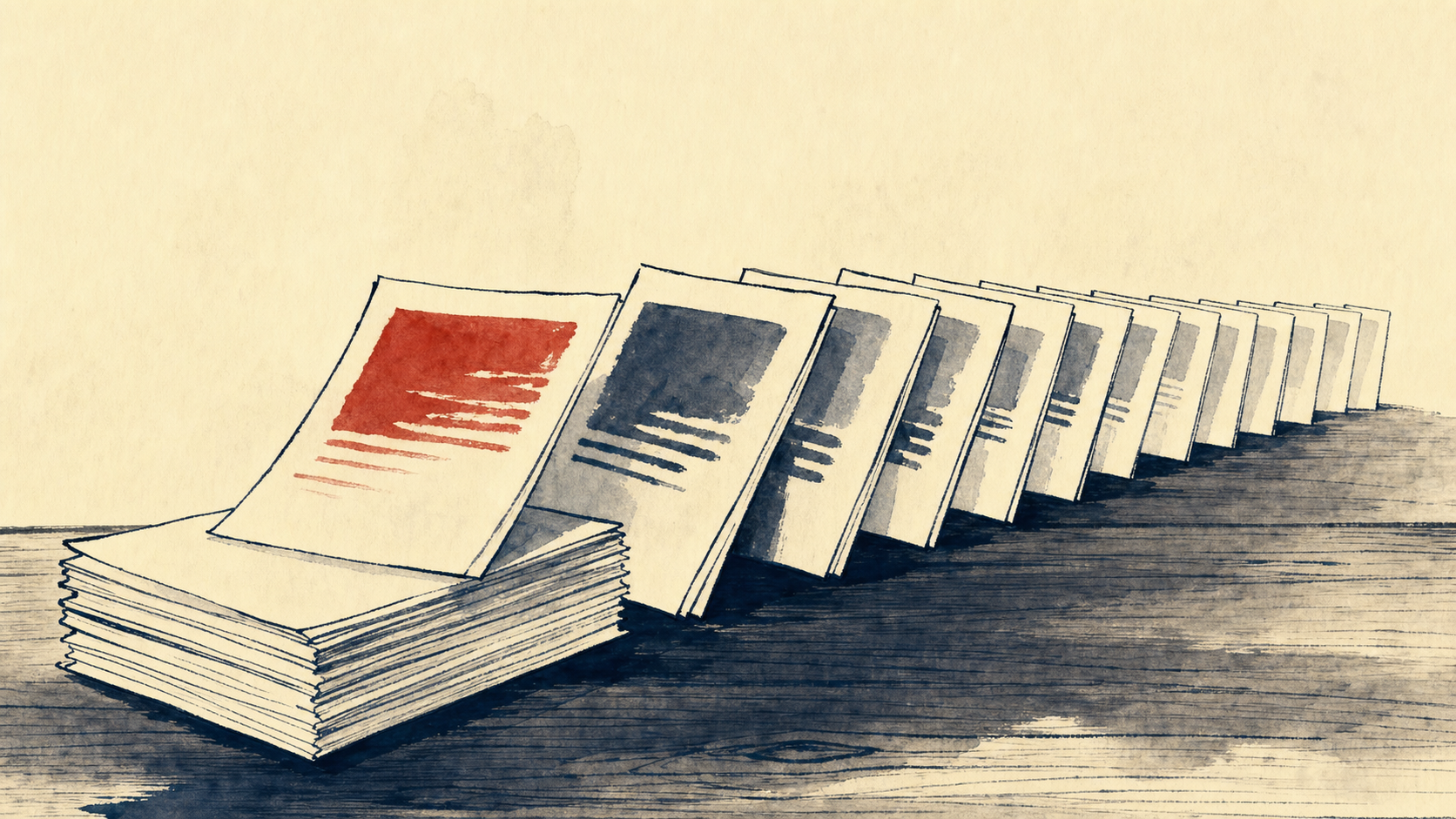
Restore the First is not claiming, and cannot show, a check written from Bill Gates's personal account to Jacob Coxon. That evidence does not exist in the public record, and the coalition will not claim it does. What the coalition can show is the funding graph, and the funding graph is the argument. Anthropic is the incumbent that most benefits if a federal licensing agency, staffed by "AI safety experts" whose research programs Anthropic's investors have spent a decade funding, is empowered to decide which competitors are allowed to ship.
If the bill passes as written, the AI mediation layer that will compose every future American's future speech will run through two or three federally licensed corporations, staffed by researchers whose funding lineage traces to the same handful of donors, advised by a board those donors have paid to build.
That is not censorship the way Facebook moderation was censorship. It is upstream of that. It is the constitutional equivalent of the FCC being given veto power over which printing presses may be manufactured.
Why this belongs to Restore the First
Two weeks ago, the six named plaintiffs of Finn v. Global Engagement Center launched Restore the First as a citizens' coalition for the First Amendment. It is built around the five original First Amendment freedoms — religion, speech, press, assembly, petition — applied to the last censorship regime: the documented pipeline from the 2021 CCDH "Disinformation Dozen" designation, through the White House pressure captured in the Flaherty email, to Facebook's 60 percent distribution penalty on plaintiff accounts, to the dismissal of the federal case on pleading defects.
That fight matters and the coalition is continuing it. But it is a rearguard fight over a censorship regime that is already being replaced.
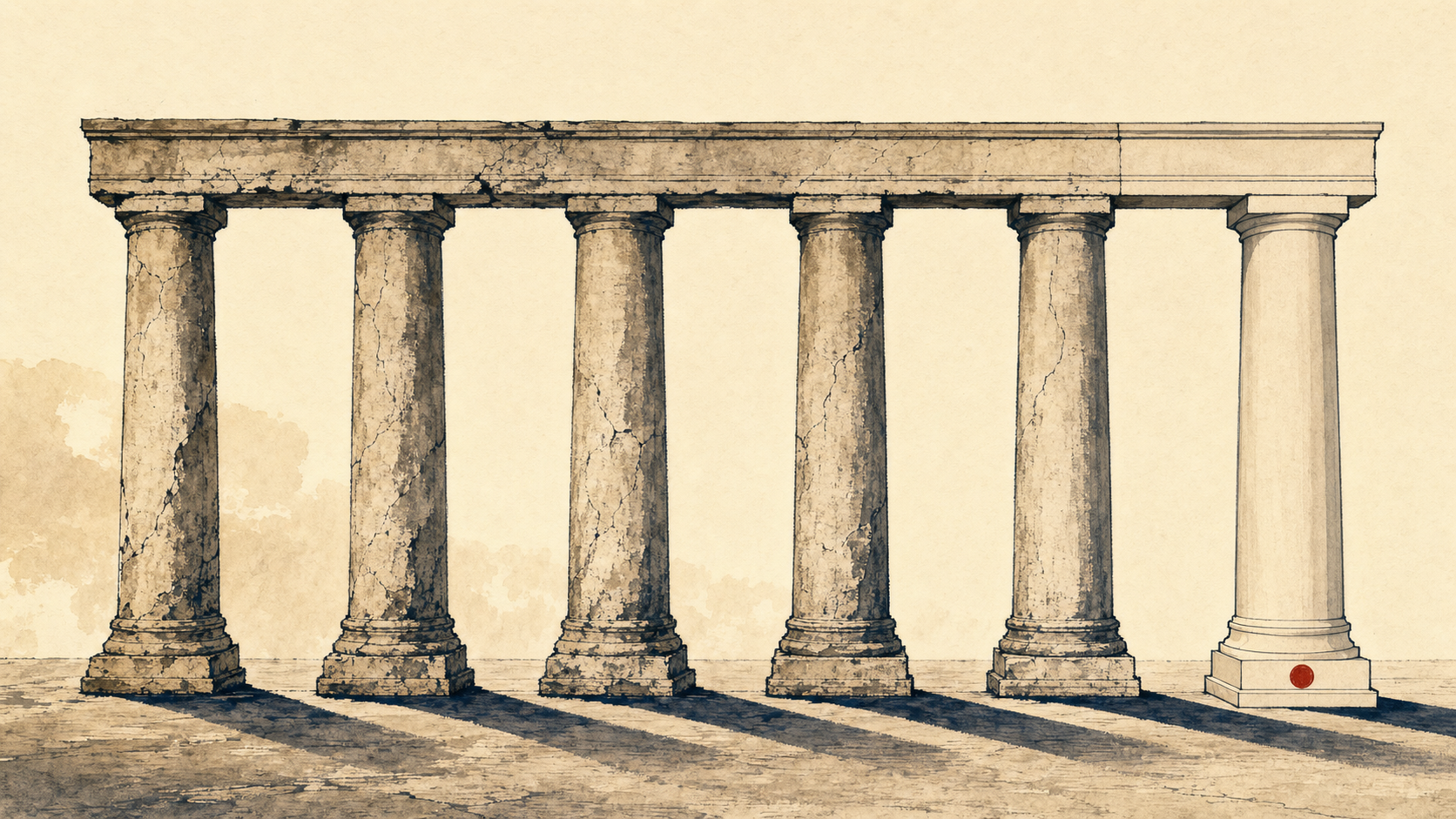
Restore the First is expanding forward. The coalition is adding a sixth pillar to its policy blueprint: Speech Infrastructure.
The name matters. AI is a technology; speech infrastructure is a constitutional category. When the mediation layer after AI arrives — neural interfaces, ambient computing, whatever the next substrate turns out to be — the pillar still stands. The pillar names what is being protected, not what is threatening it this quarter.
Speech Infrastructure applies to all five original pillars because it operates on the layer they all now run through. Religion runs through it when a citizen looks up a scripture reading. Speech runs through it when a citizen drafts an email. Press runs through it when a citizen types a question into a search bar. Assembly runs through it when a group chat uses AI to summarize what people have been saying. Petition runs through it when a citizen signs a document that was drafted, in whole or in part, by a model whose refusal behaviors were tuned in San Francisco.
If the mediation layer is captured, all five pillars are captured, silently, at once.
Six things Congress should do
Restore the First's existing policy blueprint has five demands applied to the last censorship regime. The sixth pillar adds six demands applied to the emerging one. These are not oppositional postures. They are constructive demands a congressional office can co-sponsor.
1. Keep open source legal. Oppose any regulatory framework that treats open-source AI as inherently more dangerous than closed-weights AI. The "or can easily be modified to exhibit" language must be removed from any federal statute. Modifiability is not a threat category. It is the definition of a tool a citizen can inspect.
2. Label the models, don't license the developers. Congress must legislate transparency requirements — who trained the model, on what data, with what refusal behaviors, funded by whom — not federal agency approval of which systems may exist. Labels are a First Amendment-compatible remedy. Licensing is not.
3. Interoperability mandates for AI-mediated services. When a person's AI is drafting their communications, coaching their conversations, or intermediating their relationships, they must be able to switch providers without losing continuity. Lock-in is the mechanism by which a temporary market advantage becomes a permanent constraint on speech.
4. A private right of action for algorithmic harm. Extend the same logic Restore the First already champions for the last censorship regime: give every American the standing to sue when an AI system demonstrably shifted their political, medical, or financial decision through undisclosed bias. The private right of action is the constitutional pressure valve when regulatory capture forecloses the administrative one.
5. Reject federal licensing of AI development. The Sanders-Casar Ban Artificial Superintelligence Act, in its current structure, is prior restraint on speech infrastructure. Oppose it explicitly by name. Support any alternative framework that regulates deployment harms — fraud, defamation, market manipulation — rather than development capability. Regulating harm is First Amendment-compatible. Regulating capability is not.
6. Establish a Speech Infrastructure Subcommittee within House Energy & Commerce. Modeled on the existing Communications and Technology Subcommittee but with explicit jurisdiction over AI mediation layers. This gives Congress a home for the oversight function the Sanders bill was attempting to build through a cabinet-level agency, without transferring licensing authority to the executive branch. It is the constructive answer to the oppositional posture in Ask #5.
What is different about this fight
Every previous censorship fight the health-freedom movement has been in — including the 2019 investigation of Google's search suppression of GreenMedInfo and Finn v. Global Engagement Center in 2026 — has been reactive. The suppression happened; the coalition documented it; the coalition sued.
This one is prospective. The suppression has not happened yet. The infrastructure is being poured this month. If Restore the First waits to add a sixth pillar until an AI mediation layer has already been used to suppress a specific citizen or publication, the coalition will be documenting the ruins after the building is finished.
The coalition recognizes why that is uncomfortable for a project whose credibility rests on the receipts of what already happened. The Finn record is what makes Restore the First a serious voice and not just another advocacy shop. But the same receipts are what make the coalition's voice uniquely credible on the next phase — because its plaintiffs have already lived through the last two. The pattern is not speculative to them. It happened to them.
The Sanders bill is not the last version of this fight. It is the first. If it passes, similar bills will follow in every jurisdiction that watches the U.S. lead. If it fails but the funding graph behind it stays in place, the same coalition of donors will bring the same bill back next Congress under a different name. The mediation layer is being nationalized regardless. The question is whether there is an organized First Amendment constituency positioned to shape how.
Restore the First has the coalition, the legal thesis, the primary-source discipline, and the congressional relationships to be that constituency. What it did not have, until this week, was a named pillar for the fight that is already here.
It does now.
Restore the First has added Speech Infrastructure as its sixth pillar. Read the coalition position and the six asks at restorethe1st.com/blueprint.html. Preserve the records. Hold public hearings. Protect the layer that composes what every American will say next.
Restore the First is a citizens' coalition organized around the six plaintiffs in Finn v. Global Engagement Center and their partner organizations, including GreenMedInfo, Global Wellness Forum, Stand for Health Freedom, MAHA Action, Health Freedom Defense Fund, and DailyClout. This coalition statement is part of a continuing investigation of the funding graph behind the September 2026 AI regulatory operation. Related coalition-member reporting: "Anthropic's 'AI Whistleblower' and the CCDH Playbook Nobody's Connected" (Sept 11) and "Bernie's Anti-Oligarch Bill Was Written by the Oligarchs" (Sept 12).