Lawfare · Due process abroad: a case study · October 14, 2026

The conviction is final.
The questions about how he got to court are not.

Reiner Fuellmich, a German lawyer who co-founded the Berlin “Corona Investigative Committee,” is serving a sentence for breach of trust that Germany’s Federal Court of Justice has made final. This page does not relitigate that verdict. It sets out three things the record leaves open: how German officials brought him from Mexico without an extradition hearing; why five months of his detention were not credited because of what he said in his own trial; and how much longer a man past the two-thirds mark of his sentence will be held. And it asks the United States government to raise those questions with Berlin.

What the courts decided · From Mexico to Frankfurt · What Berlin has said · The detention questions · The ask · What this page is not

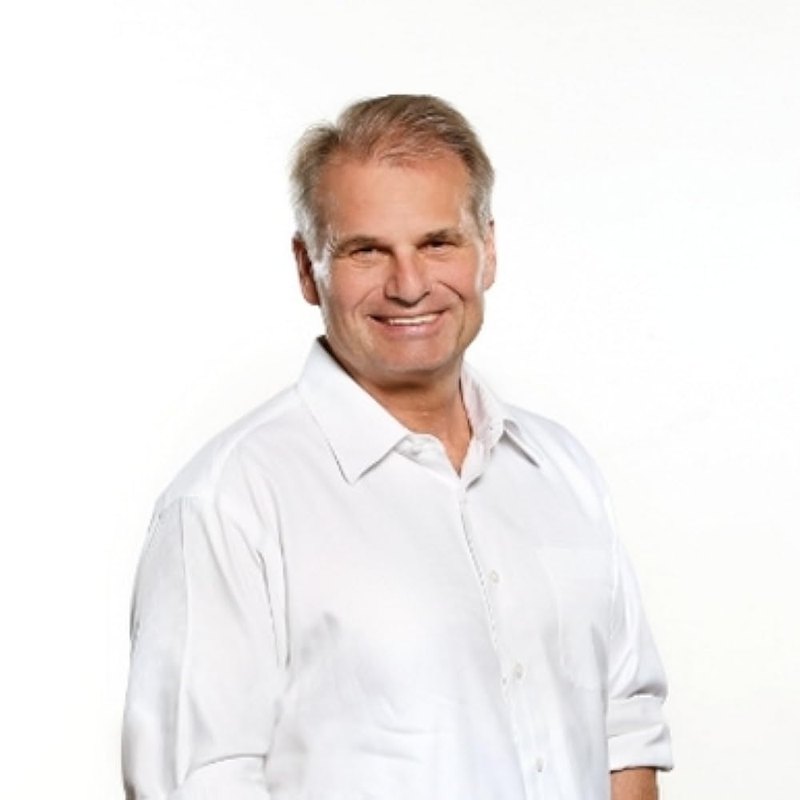
Portrait of Reiner Fuellmich, smiling, in a white open-collared shirt against a plain white background.
Reiner Fuellmich, before his arrest in October 2023. Photo supplied to Restore the First.

The record

What the courts decided, in their own words.

On April 24, 2025, the economic-crimes chamber of the Regional Court of Göttingen convicted Fuellmich of breach of trust (Untreue, § 266 of the German Criminal Code) in two cases and sentenced him to three years and nine months. According to the court’s findings, he used €700,000 in donations raised for the “Stiftung Corona-Ausschuss” for his own purposes. The court also ordered that five months of his pretrial detention would not count toward the sentence.

On March 17, 2026, the Federal Court of Justice (Bundesgerichtshof, case 6 StR 359/25) rejected his appeal except for a minor correction to the confiscation order, and upheld the decision not to credit the five months. The judgment is final. The court announced the decision on August 25, 2026 (BGH press release 152/2026; Legal Tribune Online).

A second indictment, on 16 further counts involving about €357,000, was admitted for trial by the Higher Regional Court of Braunschweig on November 5, 2024 (OLG Braunschweig, 1 Ws 46/24). Supporters report that the Göttingen court discontinued it in September 2026 under § 154(2) of the Code of Criminal Procedure, which allows charges to be dropped when they would not significantly add to a sentence already imposed. We have not yet seen a court statement confirming this.

Our position on the verdict. We take none. A German court heard the evidence over more than a year and Germany’s highest criminal court reviewed it. Readers who believe the verdict is wrong will find the defense’s case in its own filings. This page is about process: the parts of this case that should concern anyone who believes the rules have to apply to unpopular defendants too.

October 2023

No extradition hearing. A consulate appointment instead.

Fuellmich had been living in Mexico since early 2023; a German arrest warrant was issued in March 2023. On October 11, 2023, by his account, he and his wife flew to Tijuana for an appointment with Germany’s honorary consul and were detained at the airport by Mexican migration authorities. On October 13, 2023 he was arrested on arrival at Frankfurt airport. The formal route for surrendering a wanted person, extradition, comes with a hearing before a Mexican judge. It was not used; he was deported.

Why that matters is set out in emails from the prosecution file. The originals are not public. What follows are quotations as they appear in Fuellmich’s own 166-page criminal complaint of August 1, 2025, which cites each by its page in the court file (complaint, pp. 97–106). Translations are ours.

DateFrom → toAs quoted in the complaintOur translation
Aug 25, 2023 Federal Criminal Police (BKA) officer → Lower Saxony state police (LKA) „Eine Festnahme des Gesuchten in Mexiko ist nur auf Grundlage eines nationalen (mexikanischen) Haftbefehls möglich. Gegebenenfalls erscheint es sinnvoll, die erforderlichen Auslieferungsunterlagen in Deutschland vorzubereiten.“ “An arrest of the wanted person in Mexico is only possible on the basis of a national (Mexican) arrest warrant. It may make sense to prepare the necessary extradition documents in Germany.”
Sep 1, 2023 LKA officer → prosecutorCited to file p. 141, vol. 3 „Stand jetzt ist es geplant, den Reiner Fuellmich unter dem Vorwand, er müsse noch eine Unterschrift auf dem Reisepass korrigieren/leisten, in das Konsulat zu locken und ihn dort von der Migrationsbehörde festnehmen zu lassen.“ “As things stand, the plan is to lure Reiner Fuellmich to the consulate under the pretext that he still has to correct/provide a signature on his passport, and to have him arrested there by the migration authority.”
Sep 30, 2023 Prosecutor → LKA and BKA officersCited to file p. 153, vol. 3 „… ob die Möglichkeit bestünde, den Beschuldigten zwecks Erfordernis der Ausstellung einer neuen Vollmacht zum Konsulat zu bewegen. Dies scheint geklappt zu haben. … Ist das (vor Initiierung des Auslieferungsersuchens) einen Versuch wert?“ “… whether it would be possible to get the accused to go to the consulate on the grounds that a new power of attorney had to be issued. This seems to have worked. … Is that worth a try (before initiating the extradition request)?”
Oct 4, 2023 LKA officer → prosecutor „… dass Herr Fuellmich am 11.10. einen Termin beim HK gemacht hat. Das wird die Möglichkeit für uns werden.“ “… that Mr. Fuellmich has made an appointment with the honorary consul on 11 October. That will be our opportunity.”

What these quotations would show, and what they wouldn’t. If accurate, they show German officials told in writing that arrest in Mexico required a Mexican warrant or extradition, then planning instead to bring a German citizen to a German consular appointment on a pretext and have him detained by local authorities. That is a serious question about the use of consular services and about bypassing a judicial hearing, whatever the merits of the underlying charge. They do not show who decided it, whether Mexico was asked to deport rather than extradite, or why. Those are the questions below. We are seeking copies of the cited file pages from the defense and will publish them if provided.

What Berlin has said

Three official answers. None of them an answer.

Who askedWhomReplySource
A member of the Bundestag, written question Federal Ministry of the Interior Asked which German state bodies took part in the transfer from Mexico and on what legal basis. February 19, 2026 reply: rights to information are governed by criminal-procedure and data-protection law, and “the federal government does not comment publicly on individual cases outside those proceedings.” Bundestag Drucksache 21/4186, Question 31
A member of the public, freedom-of-information request Federal Criminal Police Office (BKA) Asked whether the BKA paid for the flight or escort from Mexico. Reply: the BKA holds no documents matching the request. BKA reply via FragDenStaat
The same requester Federal Foreign Office Asked for records of the German embassy’s or consulate’s involvement. Refused September 11, 2025, on the ground that Fuellmich, as the affected third party, had not consented. Foreign Office refusal via FragDenStaat

Defense supporters also report an April 30, 2026 Interior Ministry letter stating that the BKA’s record of the operation has since been deleted under data-protection rules. We have not seen that letter and do not rely on it.

The detention

Five months for what he said in court, and a clock past two-thirds.

Detention not credited for courtroom conduct.

German law normally counts every day of pretrial detention against a sentence. A court may withhold credit because of a defendant’s conduct. The trial court withheld five months, finding he had used the trial “as a stage” for political messages and insults in order to delay it. The Federal Court of Justice said the power must be read narrowly, and that the number of his motions alone could not justify it, but upheld it on his other conduct (LTO). Lengthening a defendant’s custody partly because of what he said in his own defense is a question free-speech advocates should ask, whoever the defendant is.

A decision dated March, delivered in August.

The appeal decision is dated March 17, 2026. The court’s press release is dated August 25, 2026. The defense says it received the decision on August 18. During those five months he remained in custody awaiting a ruling that had already been made. We have found no public explanation from the court for the gap.

Past the two-thirds point.

He has been in custody since October 13, 2023. On our arithmetic, after the five uncredited months, about 31 months count toward a 45-month sentence as of this month. That is past two-thirds. German law (§ 57 of the Criminal Code) permits release on parole at that point at a court’s discretion; it is not automatic. On October 8, 2026 he was moved without notice from Bremervörde prison to Lingen prison; his supporters report he arrived without his belongings and in a damp cell. We report that as their account (see the October 14 update).

The ask

We are not asking Washington to overturn a German verdict. We are asking it to ask Berlin four questions.

Fuellmich is a German citizen, so the U.S. Embassy has no consular role and no standing to intervene in a final German judgment. But the United States raises human-rights and due-process concerns with allies every year, publicly and through diplomatic channels, and it reports on them in the State Department’s annual Country Reports on Human Rights Practices. On that basis we ask the U.S. Embassy in Berlin and the State Department’s Bureau of Democracy, Human Rights, and Labor to:

1. Ask how he was brought from Mexico.

Request that the German government account for the role of German officials in the October 2023 transfer: whether Germany asked Mexico to deport rather than extradite, who authorized the use of a consular appointment to bring him into custody, and whether the records still exist.

2. Ask about the uncredited detention.

Request Germany’s view on extending custody, even partly, on the basis of a defendant’s statements at his own trial, and note the case in the Germany chapter of the next Country Reports.

3. Ask about conditions and parole.

Request confirmation that his custody now meets the UN Standard Minimum Rules for the Treatment of Prisoners (the Nelson Mandela Rules), including access to his legal papers and belongings, and that a parole decision under § 57 will be made without further delay.

4. Check the American side of the file.

His complaint states that German prosecutors asked the U.S. Department of Justice in July 2023 for help seizing property in California. If a U.S. agency received a German legal-assistance request in this case, Congress is entitled to know what was asked and what was done.

What you can do. Ask your U.S. Representative and Senators to send these four questions to the State Department, and to the U.S. Helsinki Commission, which monitors human rights in OSCE member states including Germany. A two-sentence message is enough: “Please ask the State Department to raise with Germany how Reiner Fuellmich was brought from Mexico in October 2023 without an extradition hearing, and why part of his detention was not credited because of statements at his trial. These are due-process questions, not a request to overturn a verdict.”

What this page is not

Not a claim of innocence or of political motive. The conviction is final and this page does not dispute it. We do not claim the prosecution was politically motivated, and we do not adopt the words “kidnapping” or “torture” used by some of his supporters.

Not a claim about the complainants or any official. The criminal complaint was brought by former colleagues. Fuellmich has accused them and several officials of crimes; we repeat none of those accusations and name none of those people. The officials in the email table are identified only by role.

Where the facts come from. The verdict, sentence, appeal and second indictment come from the court decisions and releases linked above. The government replies come from the Bundestag record and the original agency letters. The emails are quoted from Fuellmich’s own criminal complaint, which is his advocacy document; we have not seen the originals and say so wherever they are used. Detention conditions are attributed to his supporters.

Corrections. If any official, party, or court record contradicts something here, write to coalition@restorethe1st.com and we will correct it promptly.